Know where your AI stands. Show you've done the work.
SurikaS helps you assess your AI system from a short questionnaire to a documented EU AI Act assessment: the risk classification that applies, your role, the obligations you need to meet, and a report that proves how you meet those obligations.


AI Act compliance, one guided step at a time.
Most teams building or buying AI know the questions — which rules apply, what could go wrong, what to do about it — but not where to start. SurikaS turns those questions into a guided assessment that fits the project you actually have.

Which rules apply to us?
A guided scoping questionnaire classifies your system under the EU AI Act and tells you which obligations likely apply — and which don't. The classification follows fixed rules, not AI guesswork.

What do we have to do?
The obligations that apply to you and your AI system, article by article, with the evidence that may be relevant to show you have done your work.

How do we get through it?
Upload your documents. SurikaS extracts what your system does, with the evidence for each characteristic, pre-fills answers from those documents for you to confirm or correct, and shows exactly what remains.

How do we show others?
Generate a self-assessment report from your answers and evidence, and share it with clients, investors, auditors or regulators.

Navigate the EU AI Act with confidence.
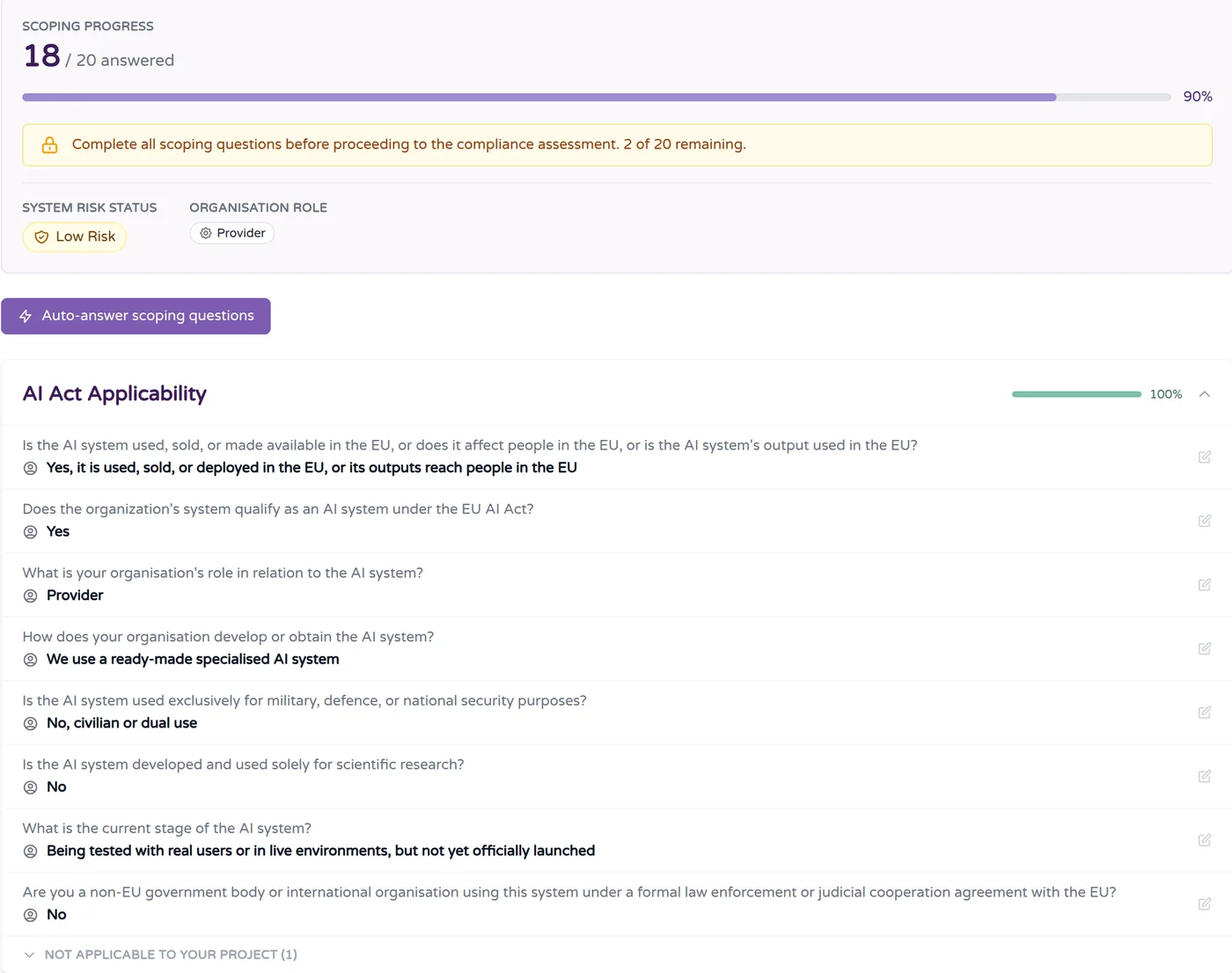
Describe your project
A name, a sentence or two, and the documents you already have — PDF, TXT or MD — followed by a short questionnaire in plain language: what the system does, who it serves, where and how it is used. Nothing has to be complete up front.
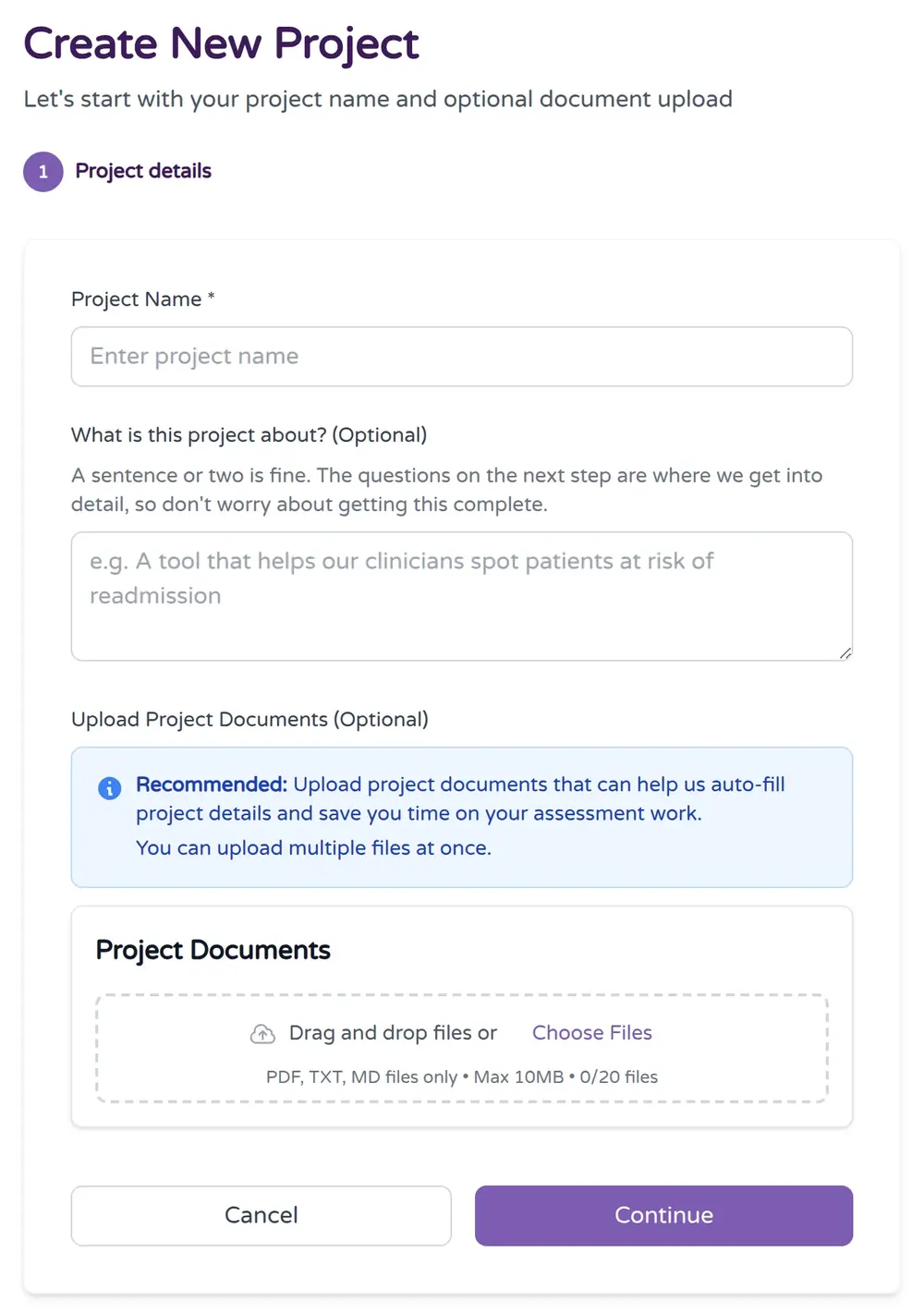
Answer the scoping questions
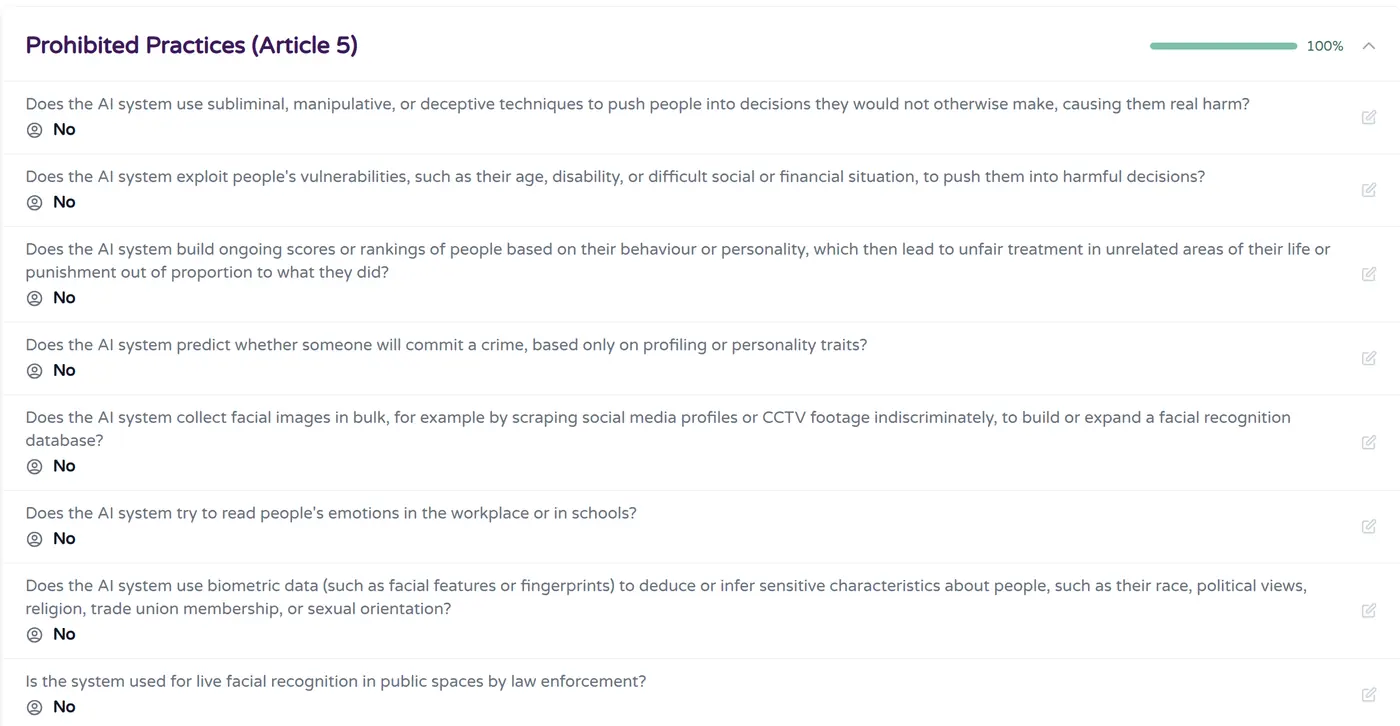
Group by group — applicability, prohibited practices, high-risk classification, transparency obligations — the scoping questions establish how the Act applies to your system. Auto-answer pre-fills what your documents already prove; you confirm or correct.
Work through your obligations
Your classification comes with its reasoning. Work through the obligations that follow, article by article, and attach the evidence for each.
Prove it
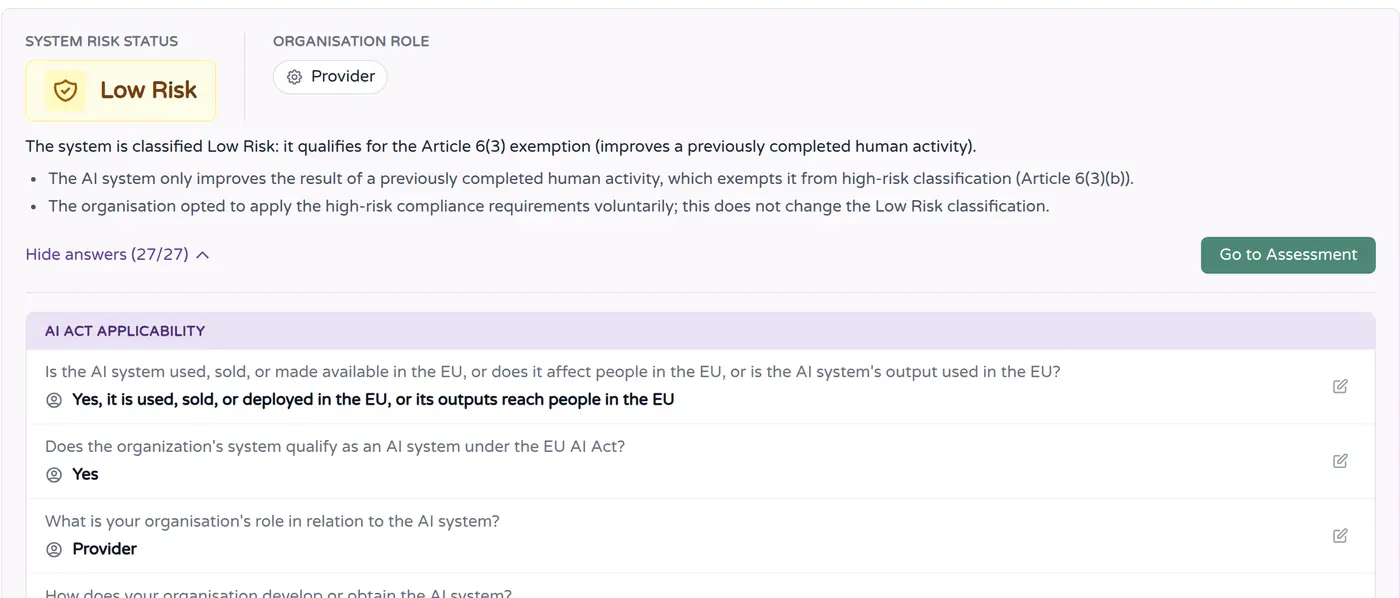
Your EU AI Act compliance report is one click away — a PDF you can hand to a client, an auditor or your own board.
The EU AI Act, handled end to end.
SurikaS helps you understand how the EU AI Act applies to your AI system, identify the obligations you need to meet, and document the assessment outcome.
Scoping questionnaire
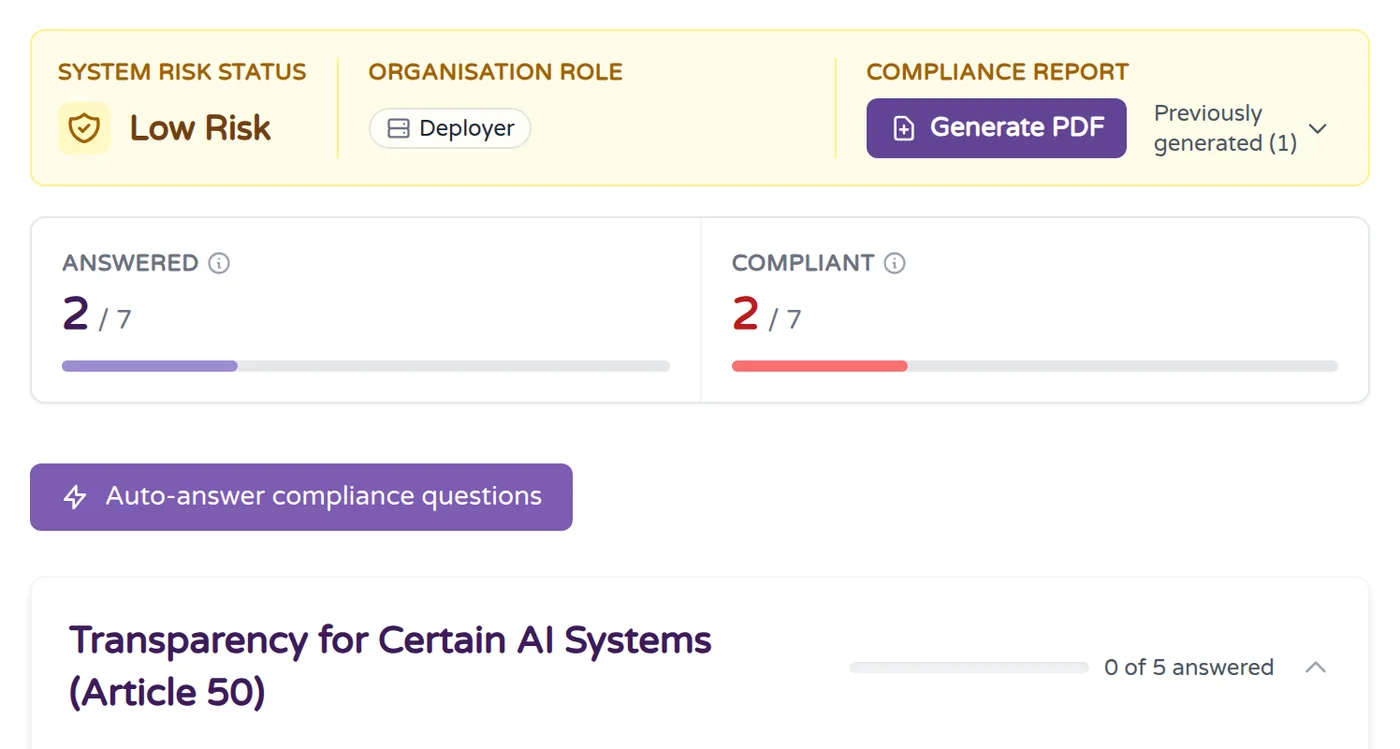
The questions that determine applicability, your organisation's role and the risk classification — with follow-ups that appear only when an earlier answer makes them relevant.
Classification with reasoning
Whether your system is high-risk under the Act, which exemptions apply, and why — in plain language you can put in front of a board.
Obligations by article
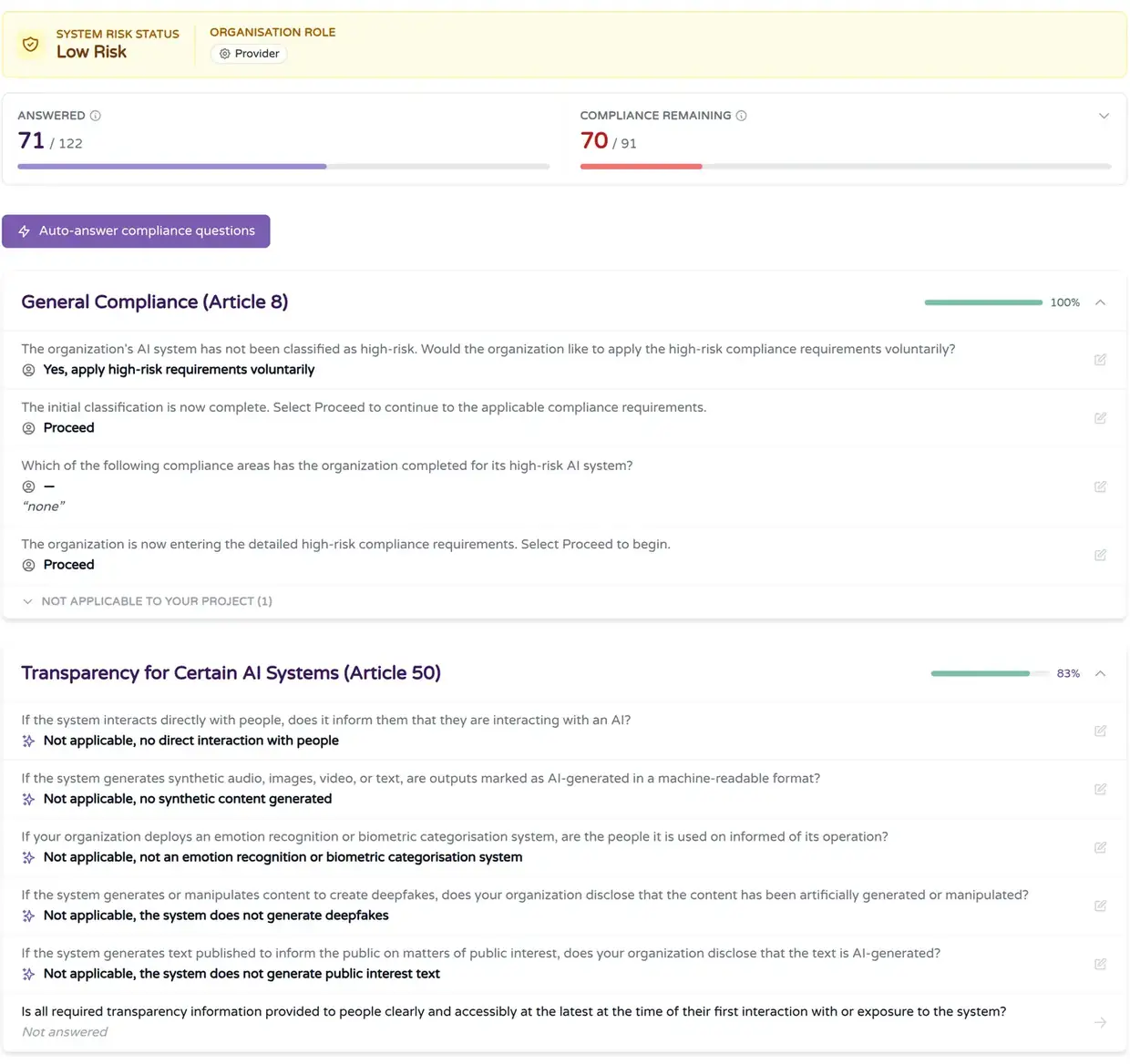
The requirements that follow from your classification and role, grouped by article, each with its own progress and a count of what remains.
Auto-answer from your documents
Scoping and compliance questions pre-filled from what you uploaded, marked as AI-answered so your team knows what to review.
Evidence of compliance
Upload and link supporting evidence to the relevant obligations, showing how each requirement is being addressed.
Compliance report
A PDF with the preparer's signature and a verification page for whoever receives it.
Document analysis
Your system's characteristics extracted from your documents, with the evidence quoted for each one.
Team workspace
Work on a project with the people who know it. Assign questions to the right person and keep the whole assessment in one place.
Professionals involved in developing, procuring, deploying and governing AI systems.
AI/ML engineers and developers
Building AI systems.
Product managers
Overseeing AI products, features and use cases.
Risk and compliance teams
Managing regulatory requirements and evidence.
AI governance teams
Overseeing policies, assessments and accountability.
Procurement officers and public buyers
Managing AI tenders and supplier selection.
Made by YAGHMA
“Our vision is to make AI innovation more trustworthy, transparent and responsible for organisations and society.”
Empowering AI trust with clarity and compliance.

Ready to see SurikaS in action?
Book a demo to see how SurikaS helps you assess AI systems, manage compliance requirements and document the outcome.
Prefer email? Write to surikas@yaghma.nl